


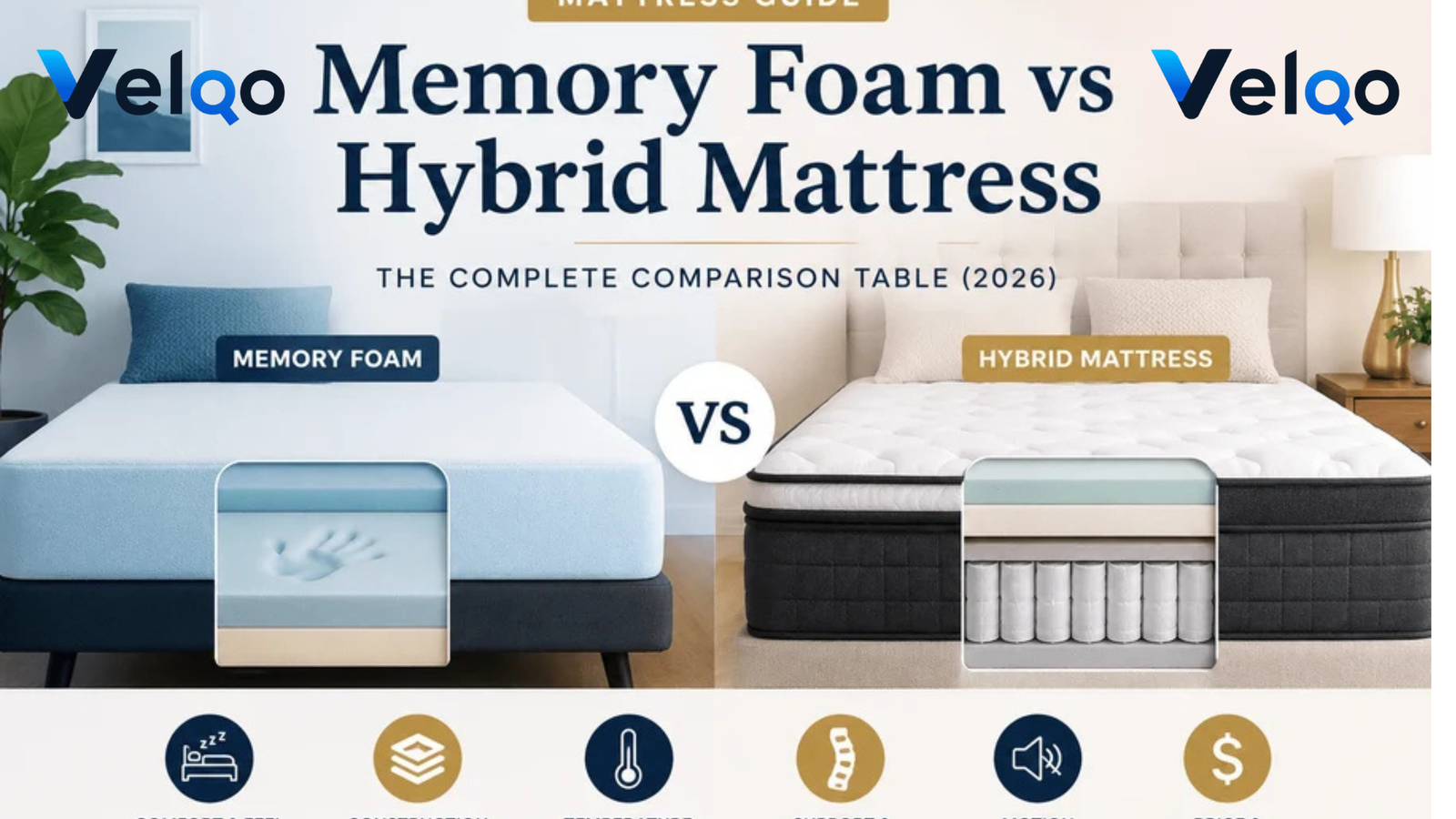
Buying a new mattress is not always as simple as it sounds. There are many different types, materials, firmness levels, and designs available today. Among the most popular options are memory foam vs hybrid mattresses. While both are designed to provide comfort and support, they offer a noticeably different sleeping experience.
If you are researching memory foam vs hybrid mattresses, the best choice depends on your sleeping position, comfort preferences, temperature needs, and budget. Understanding how each mattress is built can make it easier to decide which one is right for your bedroom.
1. Understanding Memory Foam Vs Hybird Mattresses
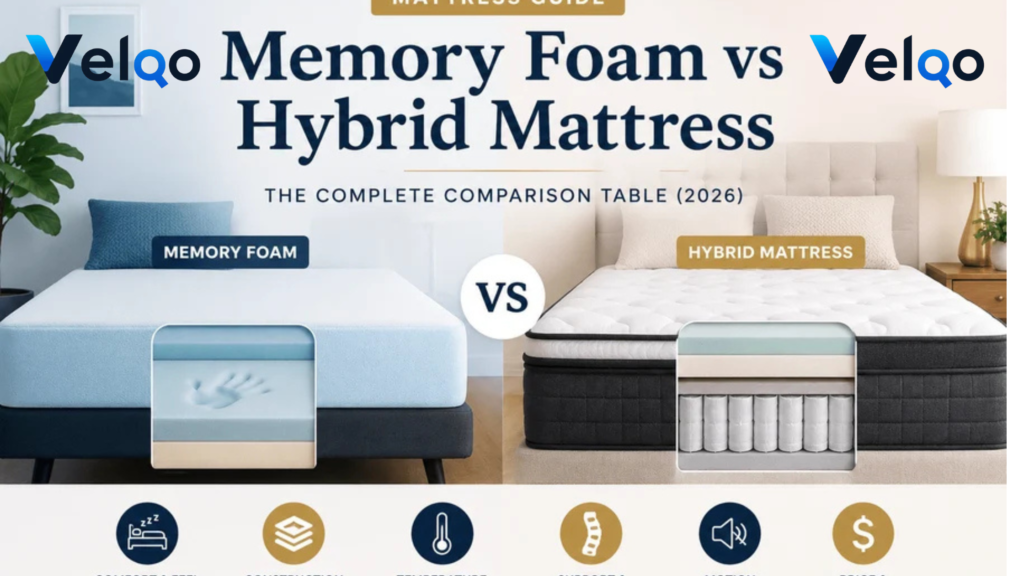
Memory foam vs hybird mattresses are made primarily from different layers of foam. The top comfort layer is designed to respond to pressure and gently conform to the shape of your body.
Instead of feeling like you are sleeping directly on top of the mattress, memory foam can create a more cushioned sensation. The material gradually responds when you lie down and slowly returns to its original shape after pressure is removed.
1.1 Why People Choose Memory Foam
The biggest attraction of memory foam is its ability to provide a close, supportive feel. It can help spread pressure more evenly across the sleeping surface, which many sleepers find comfortable.
Another major advantage is motion isolation. When one person moves on one side of the bed, the movement is often absorbed by the foam rather than travelling across the entire mattress. This makes memory foam an appealing option for couples who have different sleeping schedules.
Memory foam mattresses are also generally quiet. Since they do not rely on traditional metal springs, changing positions during the night usually produces very little noise.
2. Understanding Hybrid Mattresses
A hybrid mattress takes a different approach. Instead of relying entirely on foam, it combines comfort materials with a coil-based support system.
The upper layers may contain memory foam, latex, or other types of cushioning foam. Beneath these layers is usually a system of individually wrapped coils that provides the main structural support.
This combination gives hybrid mattresses a distinctive balance. The foam layers provide cushioning, while the coils add responsiveness and support.
2.1 Why Are Memory Foam vs Hybrid Mattresses Popular
Many people choose hybrids because they want the comfort of foam without losing the traditional feel of a spring-supported mattress.
The coil structure can make the mattress feel more responsive when you change positions. It can also provide stronger support around the edges, depending on the design.
Another potential advantage is airflow. The open spaces around the coils allow air to move through the mattress, which can be helpful for people who prefer a more breathable sleeping surface.
3. Memory Foam vs Hybrid Mattresses: Main Differences
The most important differences become clear when the two mattress types are compared directly.
| Feature | Memory Foam | Hybrid |
|---|---|---|
| Construction | Multiple foam layers | Foam comfort layers and coils |
| Overall Feel | Contouring and cushioned | Responsive and balanced |
| Pressure Relief | Excellent | Very good to excellent |
| Motion Isolation | Excellent | Good to very good |
| Airflow | Can be more limited | Generally better |
| Bounce | Minimal | Moderate |
| Edge Support | Varies by model | Often stronger |
| Movement | Slower response | Easier to move across |
| Best For | Contouring comfort | Balanced comfort and support |
The table shows that neither option is automatically better. Each mattress is designed to suit different preferences.
4. Comfort and Pressure Relief
Comfort is one of the first things shoppers consider when comparing mattresses. Memory foam is well known for its contouring effect. As you lie down, the foam can adjust around areas that carry more body weight.
This can create a cushioned sensation that many people enjoy. However, some sleepers may not like the feeling of sinking into the mattress.
Hybrid mattresses can provide a different experience. Their foam layers offer cushioning, while the coils underneath create a more supportive and responsive base. Depending on the firmness, a hybrid can feel softer on top while still maintaining a stable foundation.
For people who enjoy a deep, hugging sensation, memory foam may be preferable. Those who want cushioning with a little more lift may prefer a hybrid.
5. Temperature and Breathability
Sleeping temperature is another factor worth considering. Some traditional memory foam mattresses can hold onto body heat because dense foam does not allow as much internal air movement.
However, modern memory foam designs may use specialised foams, ventilation channels, or breathable covers to improve temperature management. Therefore, not every memory foam mattress will feel the same.
Hybrid mattresses often benefit from their coil systems. The open structure around the coils can encourage greater airflow inside the mattress. This may make some hybrids feel more breathable.
If you regularly find yourself feeling too warm at night, it is worth looking at the materials and construction rather than choosing based only on the mattress category.
6. Motion Isolation for Couples
If two people share a bed, movement can become an important consideration. Memory foam generally performs strongly in this area because its layers can absorb movement.
For example, if one sleeper changes position, the other person may experience less disturbance. This is one reason why memory foam is often considered a good choice for couples.
Hybrid mattresses can also provide effective motion isolation, particularly when they use individually wrapped coils. However, because coils can create more bounce, some movement may be more noticeable than on an all-foam design.
If reducing movement is your highest priority, memory foam may have an advantage. If you want a livelier sleeping surface, a hybrid could be more suitable.
7. Choosing Based on Sleeping Position
Your usual sleeping position should play a role in your decision.
7.1 Side Sleepers Memory Foam vs Hybrid Mattresses.
Side sleepers often look for good cushioning around pressure-sensitive areas. A suitable memory foam mattress can provide a comfortable, contouring surface.
A hybrid with a softer comfort layer can also work well, particularly for someone who wants additional support underneath the cushioning.
7.2 Back Sleepers Memory Foam vs Hybrid Mattresses.
Back sleepers generally need a combination of comfort and support. A mattress that is too soft may not feel supportive enough, while an extremely firm model may not provide sufficient cushioning.
Both mattress types can work for back sleepers. The ideal firmness depends on personal comfort and the specific construction of the mattress.
7.3 Combination Sleepers
People who move between different sleeping positions may appreciate the responsiveness of a hybrid mattress. The coil system can make repositioning easier.
Traditional memory foam may feel slower when changing positions, although newer foam technologies can be more responsive than older designs.
8. Durability and Long-Term Value
A mattress is a long-term purchase, so durability matters. The lifespan of either type depends on the quality of its materials, construction, usage, and maintenance.
A well-made memory foam mattress can provide reliable performance for years. Similarly, a quality hybrid can be durable because its coil support system creates a strong foundation.
Instead of focusing only on whether a mattress is foam or hybrid, check the quality of the materials, the manufacturer’s warranty, and the overall construction.
9. Which Mattress Should You Buy?
The answer ultimately depends on what you want from your mattress.
Choose memory foam if you prefer a close-fitting feel, strong pressure relief, quiet performance, and excellent motion isolation. It can be particularly attractive to sleepers who enjoy feeling gently supported by the mattress.
Consider a hybrid if you want a combination of foam cushioning and coil support. Hybrids can offer greater responsiveness, stronger edge support, and potentially better airflow.
It is also important to consider your budget. Prices can vary widely within both categories, so comparing individual models is often more useful than assuming one mattress type will always cost more.
10. Final Thoughts
The debate over memory foam vs hybrid mattresses does not have one universal winner. The right choice depends on your personal sleeping style and the features that matter most to you.
Memory foam focuses on contouring comfort and movement control, while hybrid mattresses combine cushioning with the responsive support of coils. If you prefer a mattress that feels soft and embracing, memory foam may be worth considering. If you want a more balanced feel with easier movement and additional airflow, a hybrid could be the better match.
Before buying, think about your sleeping position, preferred firmness, temperature preferences, and how much motion isolation you need. Comparing these factors can help you choose a mattress that fits your needs rather than simply following general recommendations.
